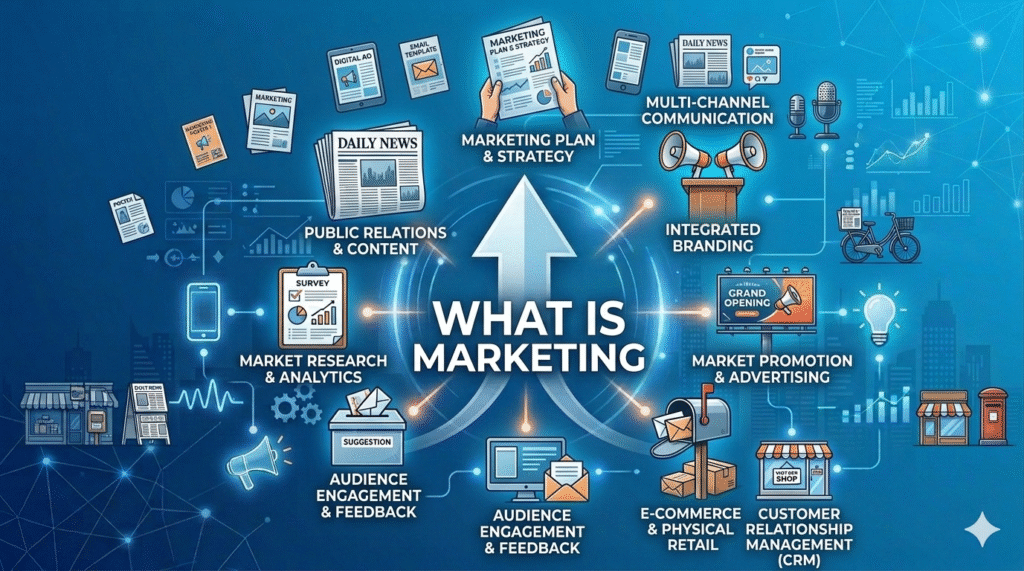
Introduction
Before the internet became popular, businesses used traditional methods to promote their products. These methods are still used today and are known as offline marketing.
Even in the digital age, offline marketing plays an important role, especially for local businesses.
What is Offline Marketing?
Offline marketing refers to promoting products or services using traditional, non-digital methods.
👉 It does not require the internet.
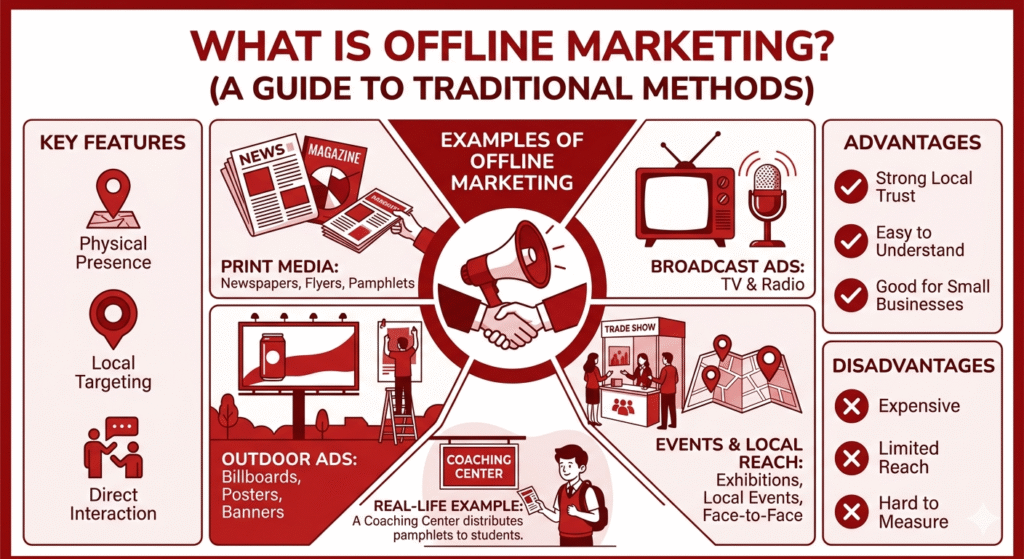
Examples of Offline Marketing
- Newspaper advertisements
- TV and radio ads
- Posters and banners
- Pamphlets and flyers
- Billboards
- Events and exhibitions
Key Features of Offline Marketing
1. Physical Presence
It happens in real-world locations.
2. Local Targeting
Mostly used to target nearby customers.
3. Direct Interaction
Customers can interact face-to-face.
Advantages of Offline Marketing
- Builds strong local trust
- Easy to understand
- Works well for traditional audiences
- Useful for small and local businesses
Disadvantages of Offline Marketing
- Expensive (TV, newspapers)
- Hard to measure results
- Limited reach
- Less targeting options
Real-Life Example
A coaching center distributes pamphlets in a nearby area.
👉 Students see the ad and visit the center
👉 This is offline marketing
When to Use Offline Marketing?
- For local businesses
- When targeting older audiences
- For brand awareness in a specific area
Conclusion
Offline marketing is the traditional way of promoting products. Even though digital marketing is growing, offline marketing still works effectively in many situations, especially for local businesses and direct communication.